
AI news
5
min read
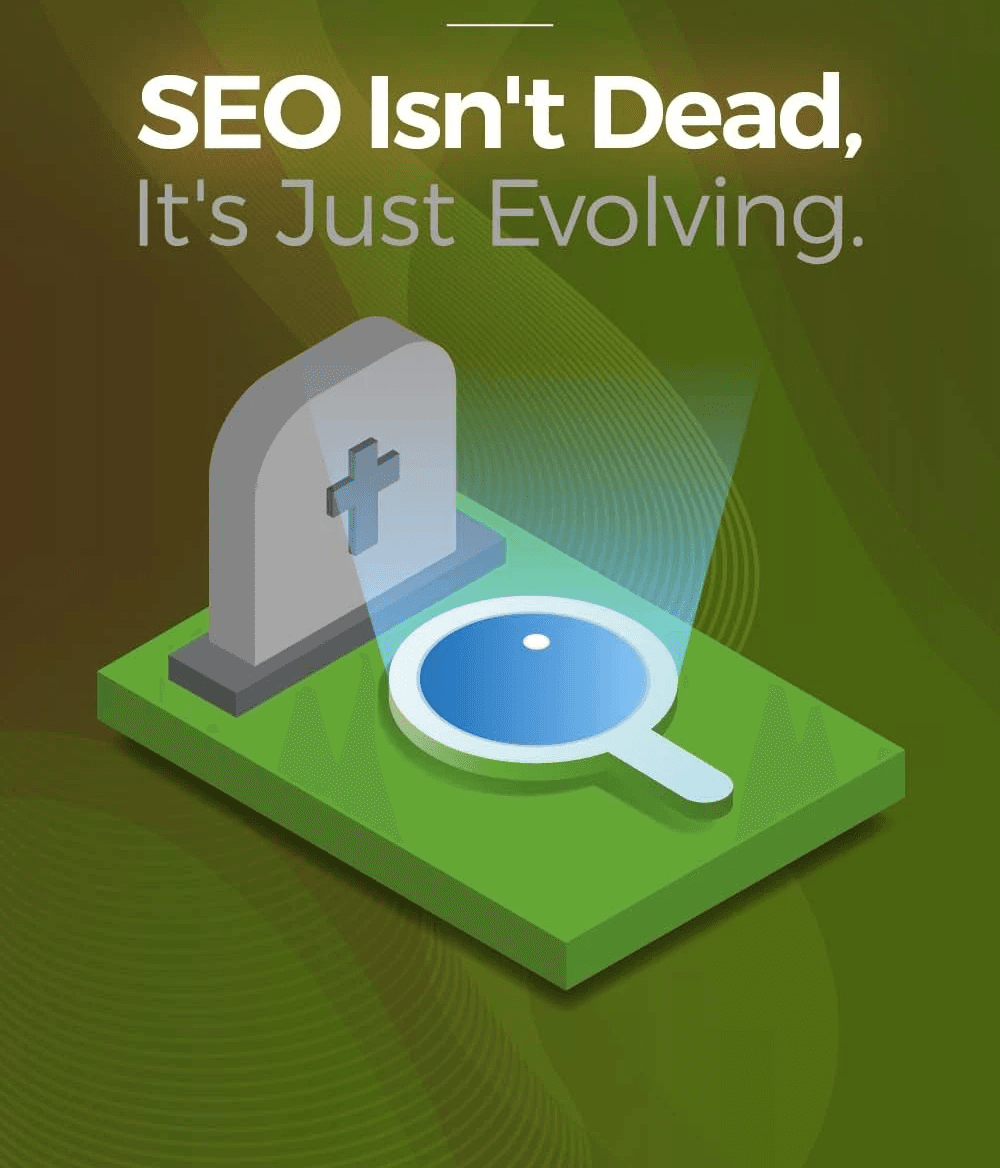
The new Google doesn't show you a list of links and let you choose. It reads all the relevant websites, synthesises the information, and hands you the answer. Right there. No clicking required.
SEO Is Dead. Here's What Killed It.
Google just made the biggest change to Search in 25 years. Over half of all searches now end without a single click. Most South African businesses haven't noticed yet.
There's a number that should make every business owner who's been investing in their website's Google ranking sit up.
58.5% of all Google searches now end without anyone clicking a single link.
More than half of all people who type something into Google in 2026 get their answer from the AI — and leave without visiting a website. The number one spot on Google, the holy grail that SEO agencies have charged for since the early 2000s, now gets as few as 11 clicks per 100 searches on queries where AI answers first. That number was 27 just 18 months ago.
The most coveted real estate on the internet is now worth less than half of what it was. And the pace is accelerating.
What Google just announced
On 19 May 2026, Google's VP of Search stepped onto the stage at Google I/O and said something that should have been front-page news for every business in South Africa:
"We are entering the next chapter of Google Search — where Google Search IS AI Search through and through."
They rebuilt the search box for the first time in 25 years. The new Google doesn't show you a list of links and let you choose. It reads all the relevant websites, synthesises the information, and hands you the answer. Right there. No clicking required.
Google's AI Mode now has over 1 billion monthly users. Search queries are three times longer than they used to be. People aren't typing "web designer cape town" anymore. They're asking: "I need a web designer in Cape Town who understands AI and can build something that actually gets me more clients — who should I talk to?"
And Google's AI answers that question by citing specific businesses by name.
What the AI is actually looking for
When Google's AI constructs its answer, it's scanning websites for specific signals. The good news: these signals are buildable. The bad news: almost no South African business has them yet — which is exactly why this is the moment to act.
Here's what determines whether you get cited:
**Structured data.** Code in your website that explicitly tells the AI who you are, what you do, where you are, and what you charge. Without it, AI has to guess. It'll cite the competitor who made it easy.
**Direct answers.** Content that buries the answer three paragraphs deep gets skipped. Content that leads with the answer in plain language gets cited. The AI wants the clearest, fastest answer — not the most beautifully written page.
**Entity authority.** AI systems need to know your business is real before they'll reference it. Consistent name, address, and phone across Google Business Profile, your website, and directories. The more consistently you appear, the more trustworthy you are to the machine.
**Topical depth.** One page about your service isn't enough. The sites getting cited own their topic — multiple pages, every angle covered, every question answered. They're the go-to source, not a passing mention.
**Technical foundations.** Fast site, mobile-first, clean structure. This never changed. These are the entry requirements. Without them, nothing else matters.
The South African window
Here's what makes this particularly important for businesses in South Africa.
AI search adoption here is still early. Most SA business websites have zero structured data. Most have no FAQ sections with the right markup. Most have never considered whether they're the kind of source AI would cite — because this concept barely existed 12 months ago.
This is the same window that existed for basic Google SEO in 2010. The businesses that moved early captured rankings they still benefit from today. They did it before every agency was selling the same service, before it got competitive, before the window closed.
That window is open right now for AI Search. The businesses that implement these changes in the next six months will own their categories in AI responses before their competitors even understand what changed.
What to actually do about it
If your website was built in the last few years and is reasonably maintained, here's what needs to be added:
1. Business schema markup — the code that introduces your business to AI in the language it reads.
2. FAQ sections with schema on every service page — structured Q&As that AI pulls from directly when answering questions in your industry.
3. Content that answers questions first — pages restructured to lead with the answer, not with background context.
4. A consistent entity presence across Google Business Profile, directories, and social platforms.
5. A content cluster around your main services — multiple connected articles that establish you as the authority on your topic.
Most of this can be implemented on an existing site within a few weeks. None of it requires rebuilding anything from scratch.
The question isn't whether to do it. The question is whether to do it now, while most competitors haven't heard of it — or later, when everyone already has.